Showing posts with label caterpillar. Show all posts

Thursday, August 11, 2016

Summer Showers


The past few weeks have been nothing but rain and more rain.  Sometimes it's a downpour while other times it's just a constant drizzle.  The main problem with all this rain is that the sun barely comes out to dry it up.  I haven't watered anything in over a week and I'm afraid my seedlings aren't growing very much without any sunlight.

I bought a small greenhouse that I'm going to set up on our back porch for starting seeds so that the rain doesn't wash away the seeds and soil.  I'll probably have it set up where I want it by my next post.  Speaking about my next post, our son, Branson, is going to be born within the next week so times are going to get busy but I'm going to make sure and keep posting as we move into fall.

New Contact Info:
Instagram - codysplants
Email - cody@codysplants.com

From around the yard:

In the garden we have black-eyed peas, watermelon, basil, and newly planted okra.  I also have overgrown tomato plants and sweet potatoes in another garden.

I'm working on stopping the grass from growing with cardboard and adding pine mulch to the walkway.  That's our new automatic hose reel, pretty cool how it works.

Amaryllis seedlings, I'm surprised at how many sprouted.  Now I need to wait for the bulbs to form.

Yellow and Purple Coneflower seedlings.  

Blue Victoria Salvia, Marigold, and Black-eyed Susan seedlings.  The marigolds are from seed saved from a parent plant in our butterfly garden.

Butterflyweed seedlings.  Having a hard time dealing with aphids on these guys.

Our drift roses are starting to fill out the front garden and looking nice.

I planted these two hibiscus next to our rain gutter and they are blooming very frequently.  

The monarchs have found our Tropical Milkweed!  


Tuesday, May 24, 2016

Do we have Florida Native Milkweed?


In the fall, someone gave us a couple milkweed plants with monarch caterpillars already on them, so we planted these in our flower garden.  The caterpillars ended up eating every leaf on the plants and then disappeared.  I'm not sure if they were eaten by predators or the caterpillars just left to find a place to create their chrysalis.  Since then, the milkweed survived the winter and has grown back very strong.  Yellow blooms have filled our garden and now seed pods are hanging from the milkweed.  These are very healthy and pretty plants but I haven't seen a caterpillar since the fall.  Do we have the right milkweed species?

Which species of milkweed do we have?

Here are some pictures of the milkweed growing in our garden:

Older picture showing off the leaves


Yellowish orange blooms

Notice the seed pods

My first thought was that these plants were Asclepias tuberosa or commonly called butterfly milkweed, but after some research I found that the flowers and leaves were very different.

Then I saw a milkweed for sale at Lowes that looked very similar to what I have growing. Asclepias curassavica, or scarlet milkweed, which is native to South America but has become naturalized in Florida.  While looking up scarlet milkweed, most pictures show the flowers being a red color, but I have found out that there is a yellow flowering variety that looks very much like the type of milkweed I have growing.


Well, I found that the milkweed in my garden isn't a native and is in fact, Scarlet Milkweed (Asclepias curassavica).  These plants will still attract pollinators and look nice, so I plan on keeping them around, although I won't be worried if they are killed off by a frost.

While researching, I did find an excellent website by Sharon LaPlante called Milkweeds Native to Florida.  She lists 21 native milkweeds growing in Florida.  You can read her website here:   Milkweeds Native to Florida


Butterfly Heroes

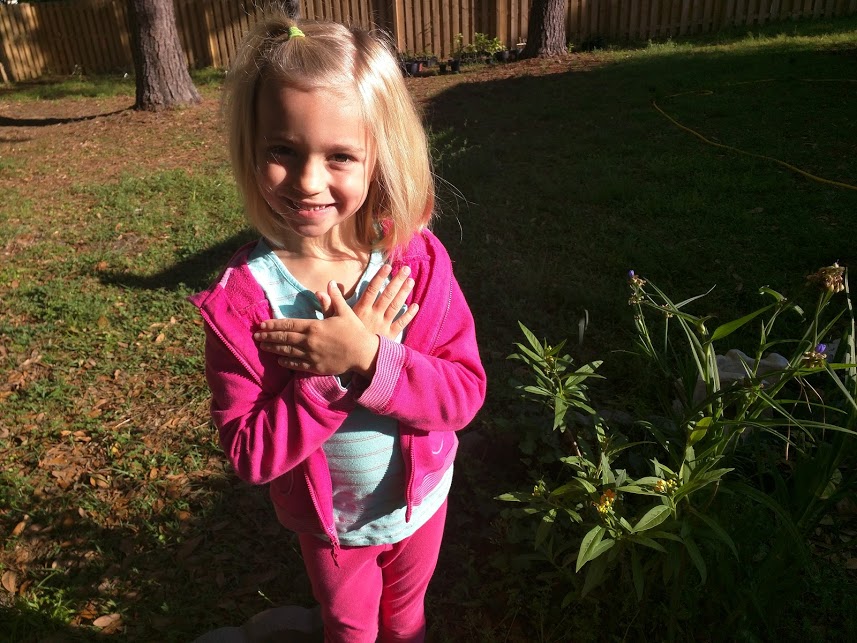
About a month ago, Olivia submitted the picture below on the Butterfly Heroes website and we recently received a butterfly packet in the mail that included seeds for Asclepias tuberosa (butterfly milkweed)!!!  Now we can start growing our native milkweed!

She made the butterfly pledge!


This is only the beginning of growing different native milkweed species in my yard!